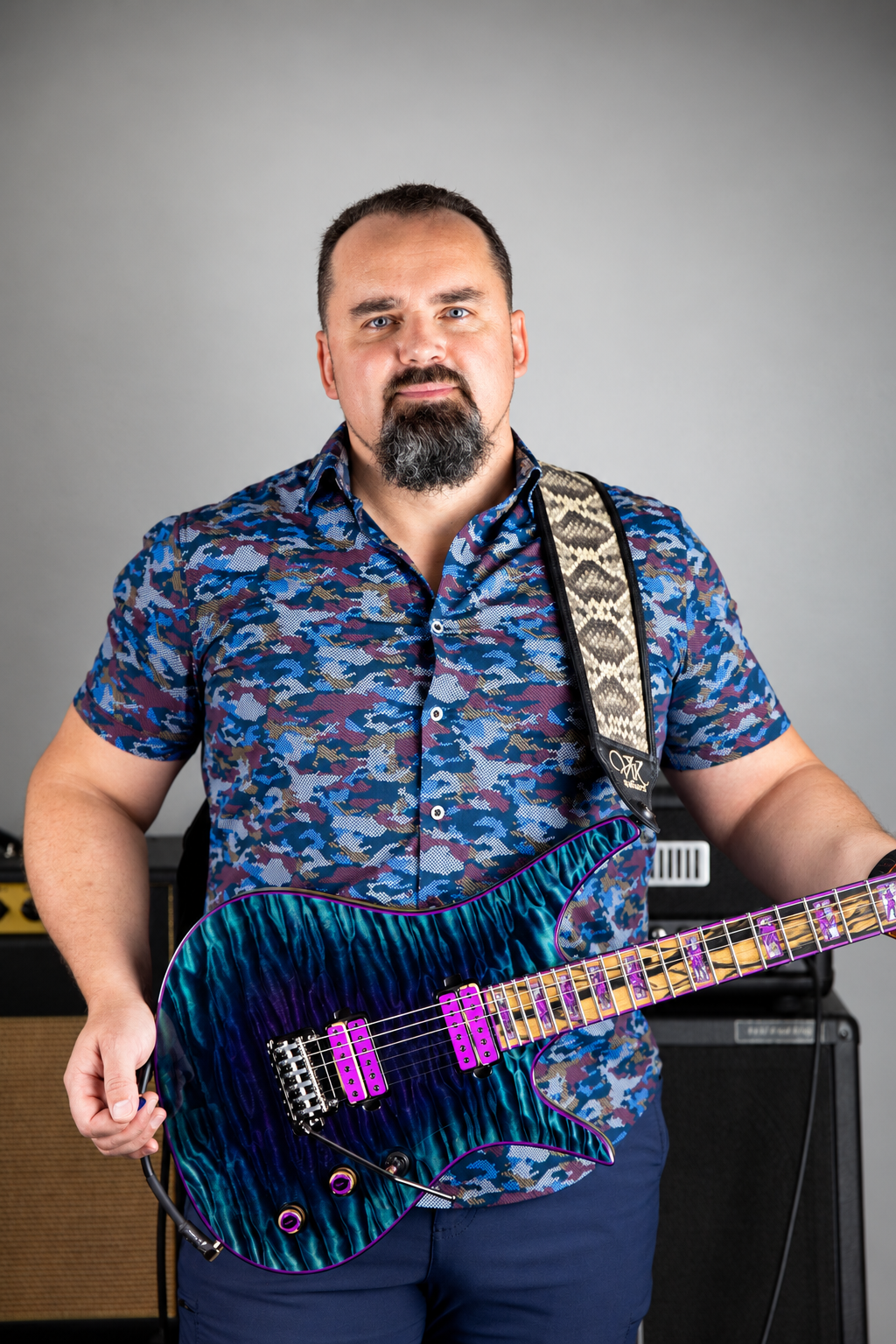
About
Vik Kuletski
Artisan Luthier · Founder of ViK Guitars
ViK Guitars is the life's work of artisan luthier Vik Kuletski — more than two decades of learning, experimenting, failing, refining and continuously searching for a better way to turn an idea into an instrument.
It was never a carefully planned career.
It started in 2003 with a guitar that simply wasn't good enough.
Like many young guitarists, Vik wanted a great instrument and couldn't afford one. His solution was characteristically optimistic: modify what he had and make it better himself.
The experiment did not go particularly well.
A few hours later, while reshaping the neck, he had exposed the truss rod and effectively destroyed it.
But something considerably more important had happened. The first real question had been asked:
How does a guitar actually work — and how far can you take it?
That question would eventually become ViK Guitars.
Learning the Craft
About a year later, Vik convinced a local luthier to take him under his wing.
At the time he was studying law, but guitars had already become the stronger obsession. Law school eventually gave way to luthiery and the ambitious goal of becoming as good at the craft as humanly possible.
The first several years were dominated by repairs, setups and restoration work rather than glamorous guitar building. Broken necks, fretwork, electronics, badly constructed instruments and endless service jobs became the real education.
It was slow, often frustrating work, but it taught something that books and specifications could not: why instruments fail, why some designs work, why others do not, and how countless small decisions affect the finished guitar.
For a while Vik stepped away from professional luthiery altogether and worked conventional office jobs. Guitar work continued after hours, however, and returning customers kept finding him.
Eventually the side work became impossible to ignore.
In the summer of 2007, ViK Guitars officially became a full-time pursuit.
The name came from the founder's initials, joined by the small "i" that would eventually become the distinctive ViK identity. Over time, the brand name became inseparable from the luthier behind it, and Vik Kuletski became the name known throughout the guitar world.
From Building Guitars to Building ViKs
The early years followed a path familiar to many luthiers: repairs, traditional instruments and interpretations of established guitar designs.
That stage was invaluable, but copying the past was never going to be the destination.
As technical confidence grew, original ideas began taking over.
The first official ViK model was the Caprice, a semi-hollow T-style instrument already showing a feature that would later become part of the ViK visual language: an unconventional lower horn projecting outward rather than following traditional geometry.
The Caprice S followed.
Then came the Duality.
The Duality would become the defining ViK model and ultimately account for the majority of instruments produced by the brand. Its proportions, carved surfaces and unmistakable silhouette became recognizable well beyond the original customer base.
This was the point where the work began changing fundamentally.
The question was no longer simply:
How do you build an exceptional guitar?
It became:
What can a guitar be when you stop assuming it has to look like everything that came before it?
A ViK Identity Emerges
Original body shapes were only the beginning.
Over the following years, ViK developed an increasingly recognizable design language across nearly every part of the instrument: carved contours, headstocks, neck joints, matching wood compositions, elaborate natural materials, custom hardware details, increasingly ambitious inlay work and finishing techniques designed specifically around the instrument being created.
The goal was never novelty for its own sake.
Every new idea had to belong.
A beautiful piece of wood is not enough. An elaborate inlay is not enough. Exotic hardware is not enough. The instrument has to work visually and musically as a complete object.
That philosophy gradually moved ViK away from conventional boutique guitar building and closer to something more personal.
The guitar became a medium.
Wood, color, form, metal, shell and light became the vocabulary.
Into the International Guitar World
By the early 2010s, ViK instruments were leaving the local scene and traveling around the world.
Players and collectors began ordering from Europe, North America, Asia and elsewhere. Some customers eventually built substantial collections of ViK instruments, while increasingly ambitious projects pushed the craft into new territory.
In 2013, ViK Guitars exhibited at Musikmesse in Germany.
In 2014, the brand made its first appearance at the NAMM Show in California, followed by further NAMM appearances and participation in major international guitar exhibitions, including the Holy Grail Guitar Show.
These years brought artist relationships, industry connections, recognition and, inevitably, some controversy.
Not every chapter was easy.
But through changes in the guitar industry, social media storms, business mistakes, difficult customers and the realities of running a tiny independent workshop, one thing remained constant:
the guitars kept getting better.
ViK Guitars History
Moments along the path — from early shop days to the world stage.
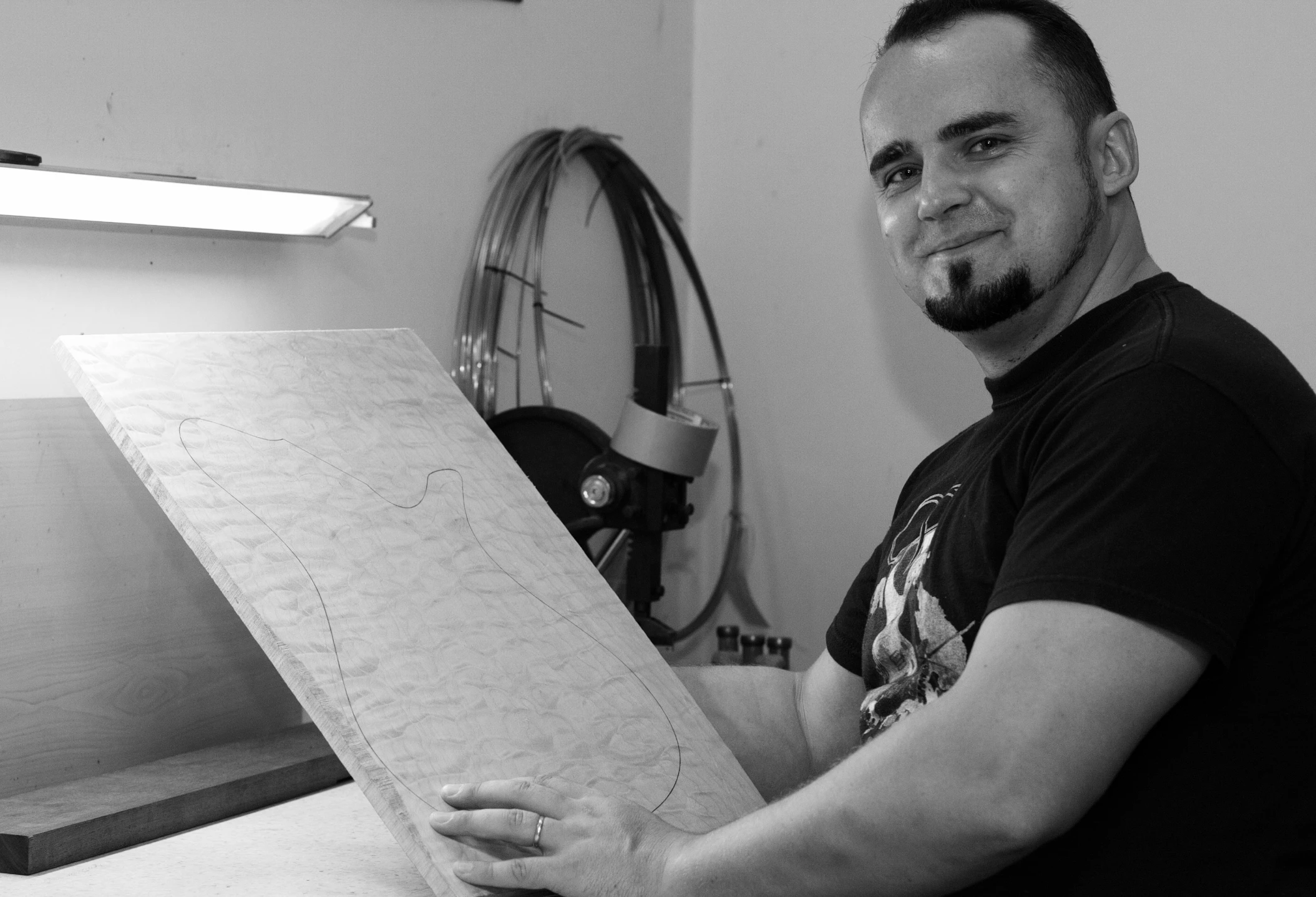
Vik in early days
The beginning of a legendary journey
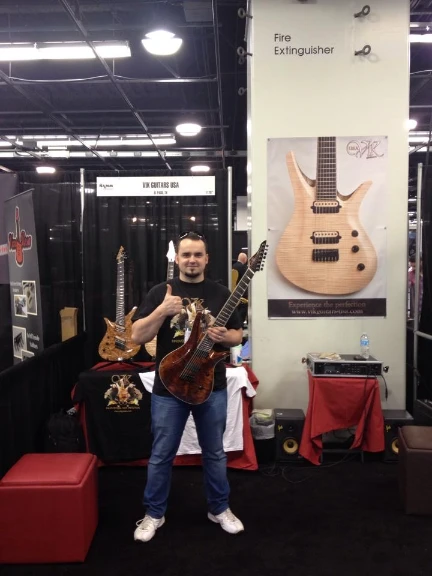
NAMM'14
First major trade show appearance
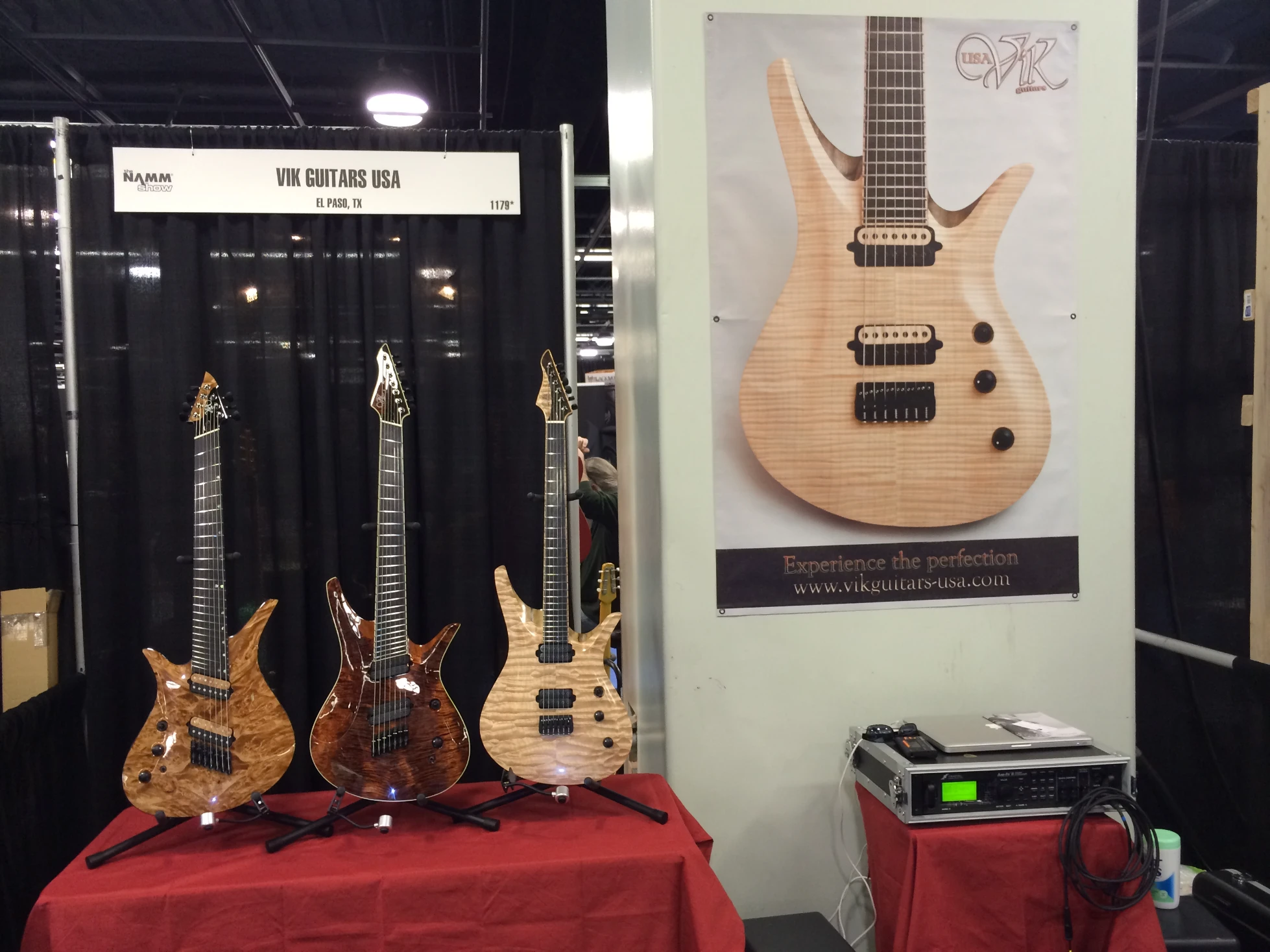
NAMM'14
Building industry connections
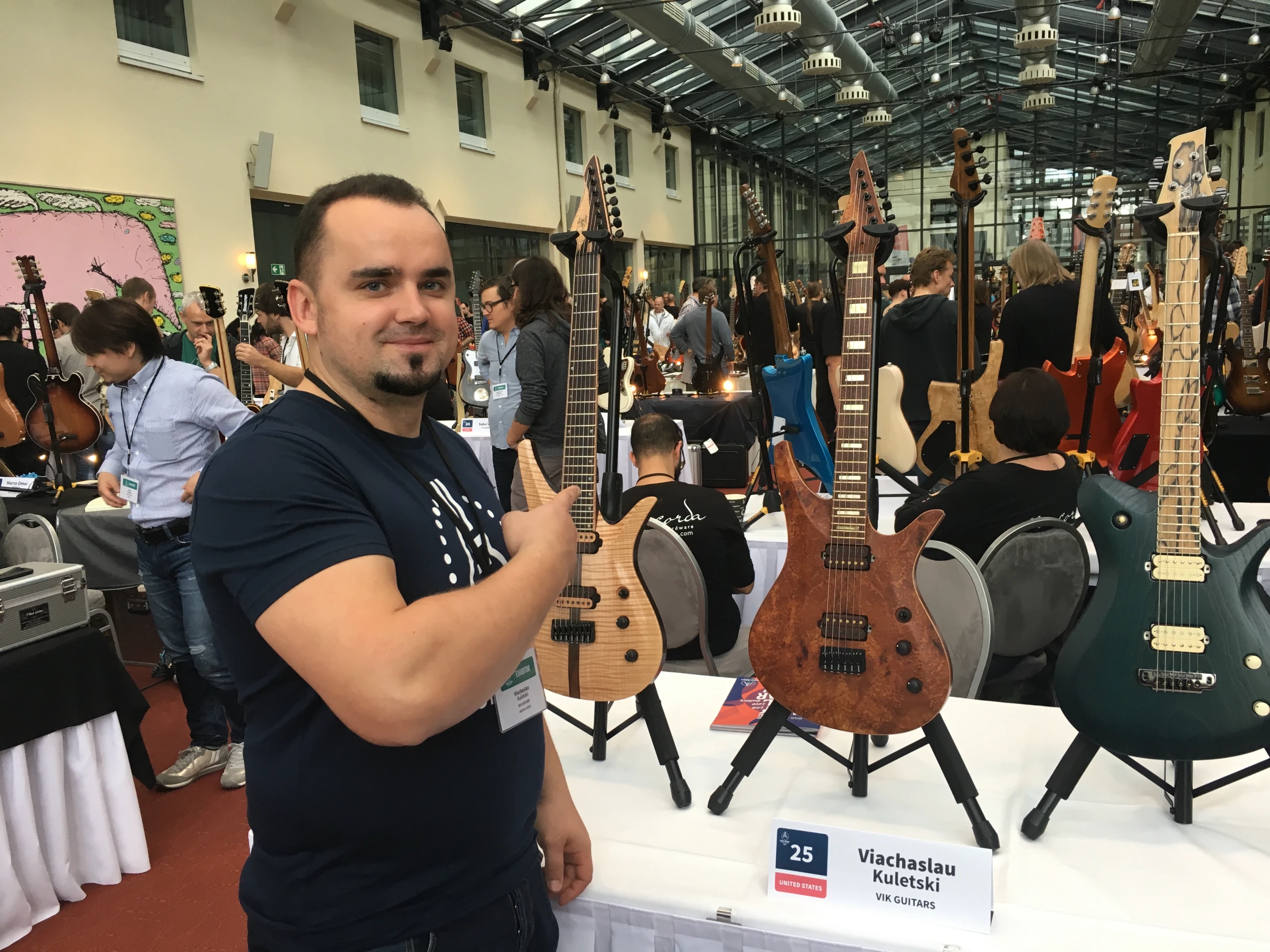
Holy Grail Show
Showcasing masterpiece instruments
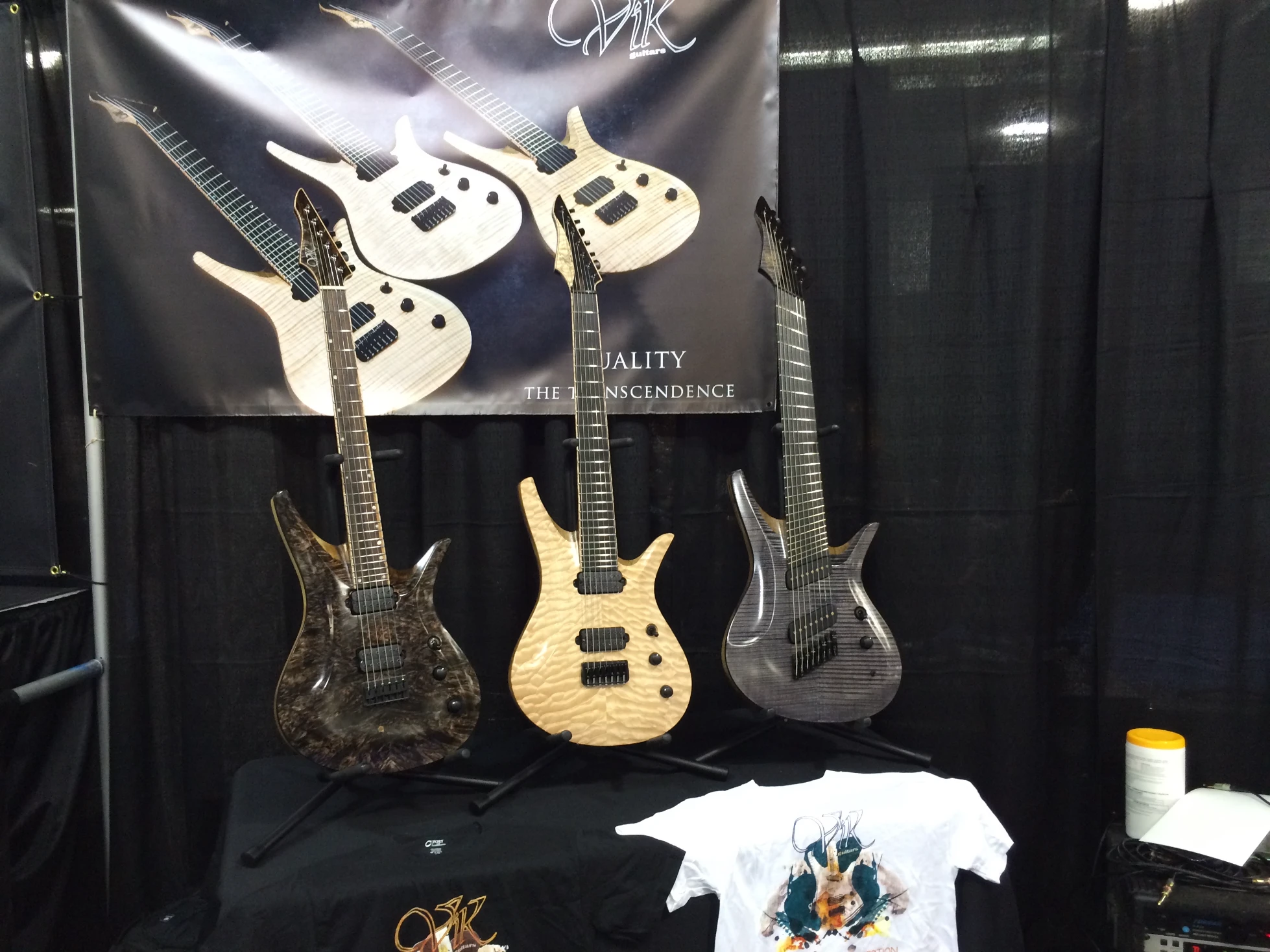
NAMM'15
Continued growth and recognition
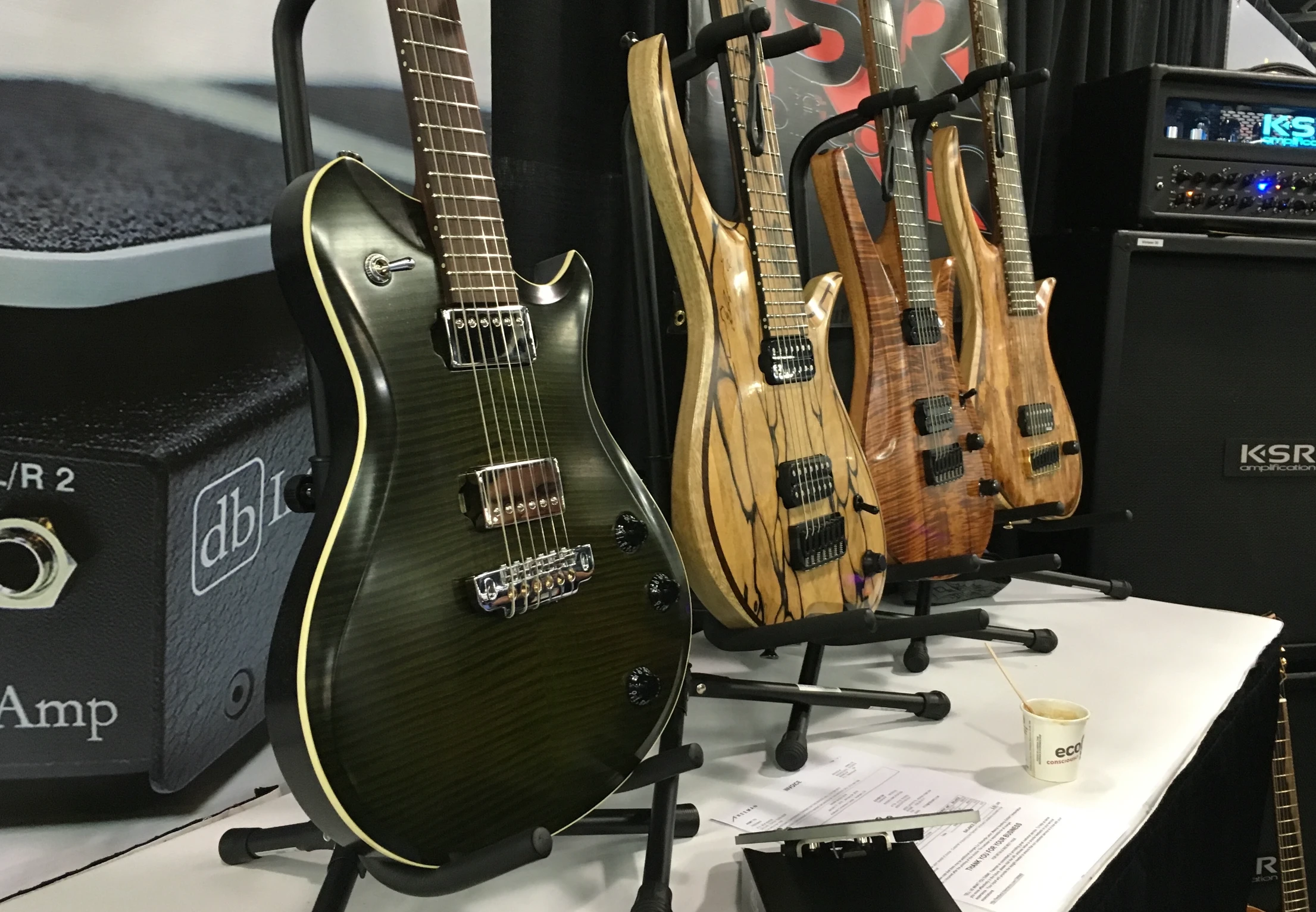
NAMM'16
Establishing ViK as a premium brand
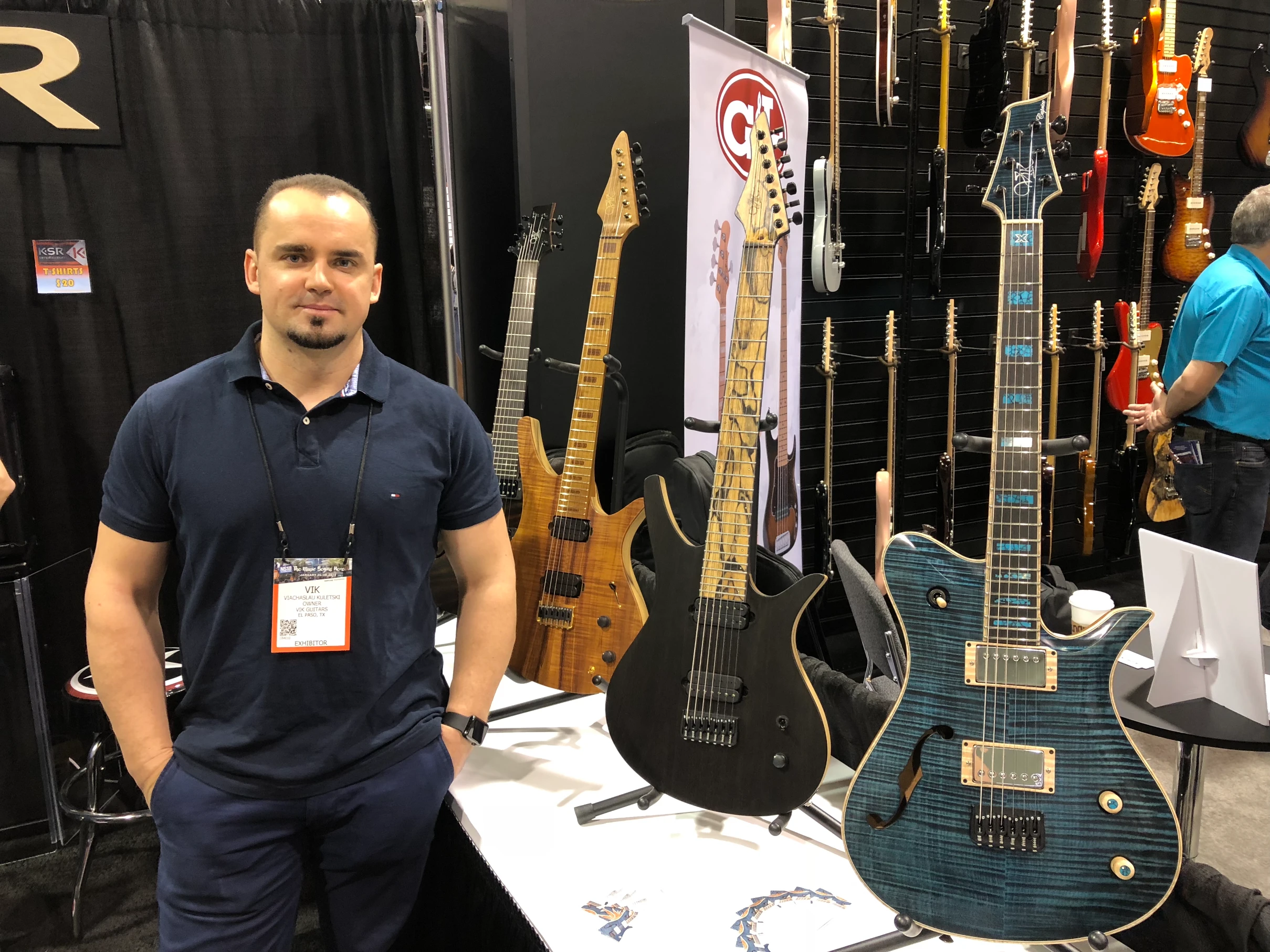
NAMM'18
Innovation and artistic evolution
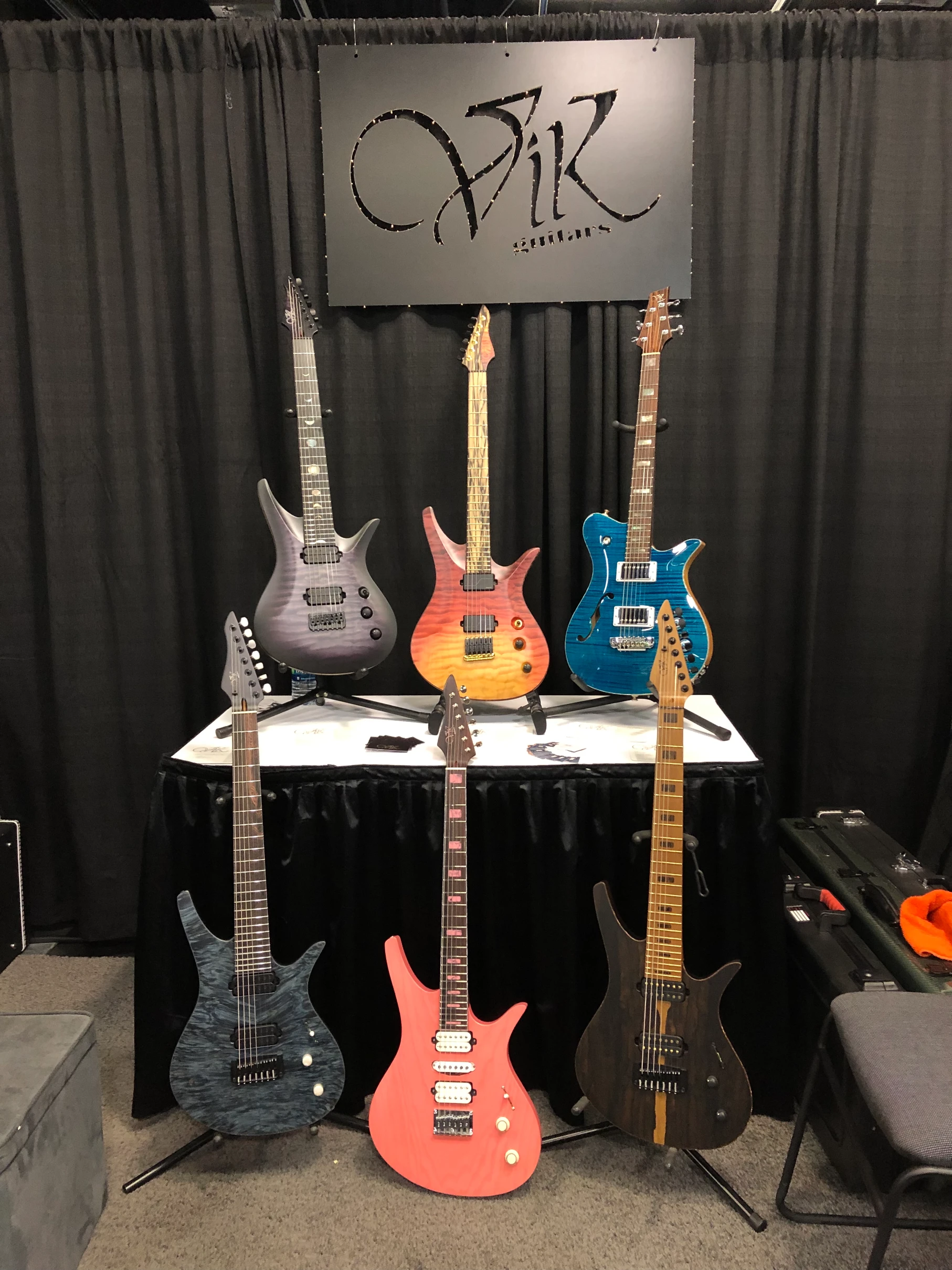
NAMM'19
Pushing creative boundaries
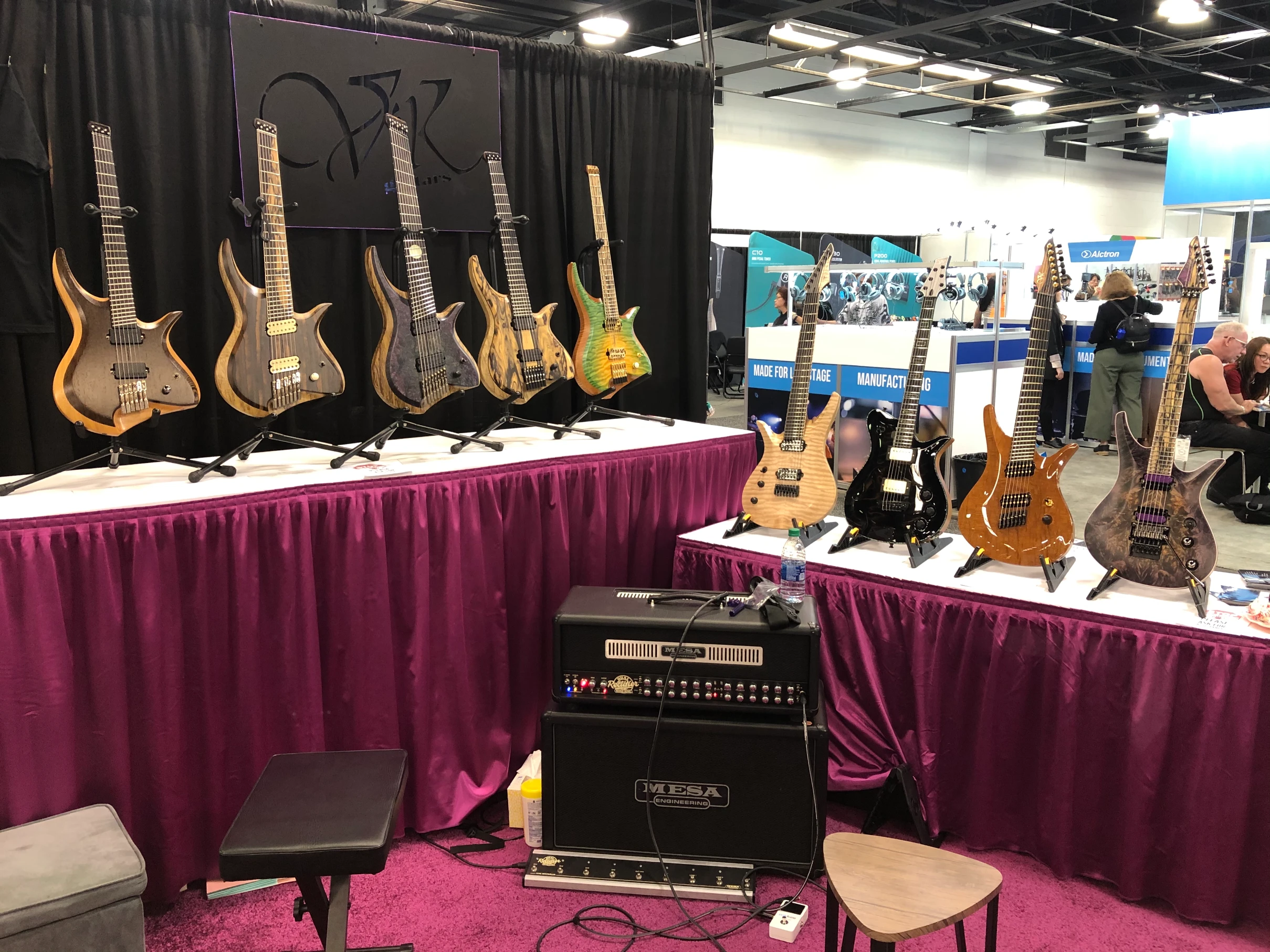
NAMM'20
The legacy continues
United States of America
In 2018, Vik and his family moved to the United States, establishing ViK Guitars in Ventura, California — directly inside one of the world's most important guitar-building regions. A great many incredible ViK instrument were born there, right by the coast and beautiful beaches of the Pacific Ocean.
Three years later, the family decided to move again, this time to real America, specifically - Eagle, Idaho.
The Idaho shop began another creative chapter.
Projects such as AURA, MONARCH, FERVOR, BUSHIDO, RED DRAGON and later the increasingly conceptual Sovereign Reserve instruments showed how far the work had moved from those early repair benches.
The technical craft was still fundamental, but by this stage it had become almost invisible beneath the larger objective.
The focus was identity.
Artisan Before Manufacturer
There has always been a tension inside ViK Guitars between art and business.
The obvious business path for a successful guitar brand is growth: more orders, more employees, more dealers, more production and eventually a workshop where the founder designs while other people build.
That path never felt right for ViK.
The attraction of luthiery was never factory ownership. It was creation.
Vik has always remained an artisan luthier first — the person conceiving the instrument and the person physically making it.
That approach places a natural limit on how many guitars can exist.
And that limit eventually became a virtue rather than a problem.
By 2025, after hundreds of instruments and nearly two decades of ViK Guitars, Vik made the decision to step away from full-time production and conventional commissions. Rather than ending the work, it removed the commercial pressure that had surrounded it.
The shop became a place to create again.
Fewer instruments.
More freedom.
No obligation to repeat what had already worked.
ViK Sovereign Reserve
That evolution ultimately gave rise to ViK Sovereign Reserve — VSR.
Sovereign Reserve is not simply a more expensive version of a ViK and it is not defined by the amount of inlay, rarity of wood or complexity of specifications.
It represents the point where the entire instrument becomes one coherent idea.
The materials, colors, inlays, forms, finish and details all serve the same identity.
Projects such as ARTIFACT, BUSHIDO, RED DRAGON and ILLUMINAUGHTY demonstrate different sides of that philosophy. They are radically different instruments, but each exists as a complete concept rather than a collection of premium features.
That is now the direction in which the most ambitious ViK work continues.
More Than Twenty Years Later
More than three hundred ViK instruments now exist around the world.
Some were commissions.
Some were experiments.
Some introduced ideas that became permanent parts of the ViK language.
Some exist as singular projects that will never be repeated.
Together they form a record of one artisan luthier's continuing search for what a guitar can become.
The tools have changed.
The designs have evolved.
Technology has entered the workshop where it makes sense.
Experience has replaced many of the assumptions of the early years.
But the fundamental motivation remains remarkably close to where it began in 2003:
an idea appears, and the challenge is to make it real.
That is ViK Guitars.
Vik Kuletski
Artisan Luthier · Founder of ViK Guitars
The Philosophy
Go Deeper Into the ViK Universe
Every ViK instrument carries a story — of craft, identity, and the search for what a guitar can become. The Journal traces that journey through luthiery, materials, design decisions, and the ideas behind each project.
Read the Journal